
🎧 Listen to this article: हिंदी · English · தமிழ் · తెలుగు · ಕನ್ನಡ · മലയാളം · ଓଡ଼ିଆ · 日本語 · 中文
🌍 Read this in your language: हिंदी · தமிழ் · తెలుగు · ಕನ್ನಡ · മലയാളം · ଓଡ଼ିଆ · 日本語 · 中文
Open the network tab on a stock Magento storefront and count the JavaScript. You'll find jQuery, RequireJS pulling in dozens of small modules, and Knockout.js wiring up the cart and checkout, all before a single product image finishes loading. That's the Luma theme, and it's been the default face of Magento for a decade. It's also the reason so many Magento stores quietly fail Core Web Vitals. For years, the escape hatch cost money. Then, in a short stretch of late 2025, the whole frontend question shifted under everyone's feet.
What Changed in Late 2025
Two significant things happened that point in different directions. First, Hyva went free. On November 10, 2025, Hyva announced it was relicensing its theme under the Open Software License 3.0 (OSL-3.0) and Academic Free License 3.0 (AFL-3.0). This means it can be used free of charge and redistributed under commercial licenses. Before this, the Hyva Theme required a paid license, which was reported to be around 1,000 euros (about 1,000 dollars) per store. This price tag was a major barrier for many teams sticking with Luma.
Second, Adobe moved on from PWA Studio. This wasn't marked by a formal end, but rather a shift in focus. Adobe's attention has turned to Edge Delivery Services, leaving PWA Studio in a maintenance mode similar to Luma's long-standing status.
Why Luma Was a Problem
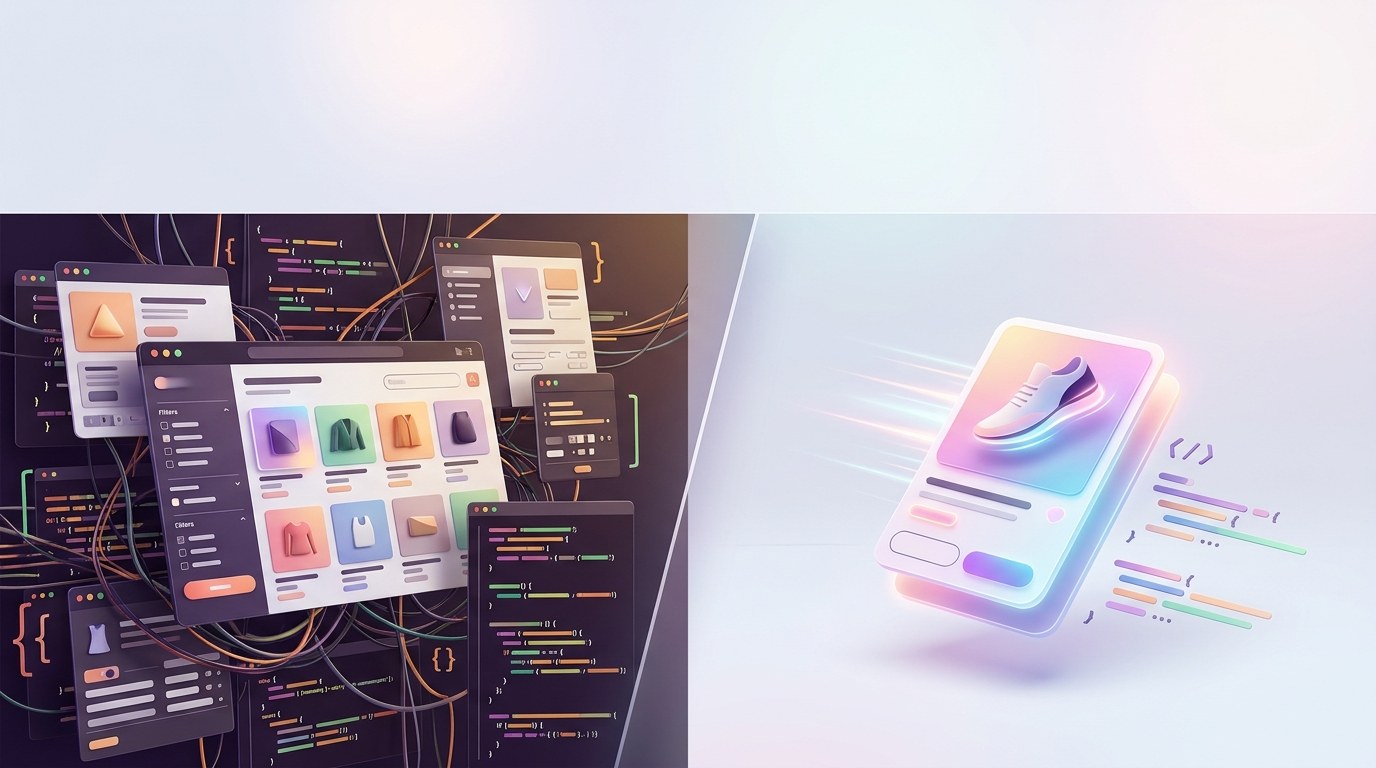
To understand why Hyva gained popularity, it's important to look at what it was moving away from. The classic Luma frontend is built on four technologies that made sense in 2015 but are outdated today: Knockout.js for data binding, RequireJS for module loading, jQuery for DOM manipulation, and LESS for styles. The issue isn't that any of these technologies are terrible; it's the combined weight of them. Luma's architecture results in a storefront that often ships a large JavaScript bundle, leading to poor performance metrics.
Agencies have reported that a typical Luma product page can pull well over a megabyte of JavaScript across hundreds of files. While you can optimize it, you're still constrained by its architecture.
Hyva's Solution: Less JavaScript
Hyva made a critical architectural decision: render on the server and send the browser almost no JavaScript. It eliminates Knockout, RequireJS, jQuery, and LESS, and instead uses Tailwind CSS for styling and Alpine.js for the small amount of interactivity needed. Alpine.js allows you to add behavior directly into HTML markup without the complexity of a module loader.
This means that a page arrives fully rendered from the server, and Alpine handles the few interactive elements. The performance improvement is significant because there's simply less JavaScript to download, parse, and execute. Teams that have migrated to Hyva report moving from failing Core Web Vitals to passing them, thanks to cutting down on main-thread work.
The Reality of "Free"
It's important to clarify what "free" means in this context. The Hyva Theme and its compatibility modules are now open source. However, Hyva Checkout, Hyva Enterprise, and Hyva Commerce remain paid products. So, while a store built on the free Hyva theme is genuinely free, a store that wants Hyva's dedicated checkout will still incur costs. This is a fair deal compared to the previous requirement of a thousand dollars per store.
PWA Studio: Not Dead, Just Different
PWA Studio, Adobe's React-based headless storefront, is not dead or deprecated. It still receives updates, with version 14.5.1 released in May 2026. However, Adobe's focus has shifted away from it. The releases now consist of compatibility and security updates rather than new features. In essence, PWA Studio is still functional, but it is no longer the future direction for Adobe.
Adobe's New Direction: Edge Delivery Services
Adobe's future focus is on Edge Delivery Services, which aims to provide fast storefronts by assembling components and serving content from the edge. This approach is designed to be lightweight and efficient, but it comes with trade-offs that users should consider.
Conclusion
The Magento frontend landscape has undergone significant changes as of late 2025. With Hyva now free and PWA Studio in maintenance mode, merchants have new options to consider for their storefronts in 2026.
Merits
- Cost-effective: Hyva is now free, making it accessible for more merchants.
- Improved Performance: Hyva's architecture leads to better Core Web Vitals scores.
- Simplified Development: Less JavaScript means easier maintenance and faster load times.
Demerits
- Compatibility Issues: Legacy extensions built for Luma may not work with Hyva.
- Paid Features: Some features of Hyva remain commercial, which could lead to additional costs.
Caution
This article is for educational purposes. Any placeholder values must be replaced with real data, and readers should verify claims against the original sources before relying on them.
Frequently asked questions
- What is Hyva? — Hyva is a frontend solution for Magento that replaces the Luma theme and is now available for free.
- Why did Hyva go free? — Hyva went free to lower barriers for merchants seeking improved frontend performance.
- What is PWA Studio? — PWA Studio is Adobe's React-based headless storefront for Magento, now in maintenance mode.
- What are Edge Delivery Services? — Edge Delivery Services is Adobe's new focus for delivering fast storefronts using edge technology.
- How does Hyva improve performance? — Hyva reduces the amount of JavaScript sent to the browser, improving load times and interactivity.
- Are there any costs associated with Hyva? — While the Hyva Theme is free, some features like Hyva Checkout remain paid.
Tags
#magento #ecommerce #frontend #webdev #hyva #pwa #adobe #corewebvitals #performance #webdevelopment
Linux Server Hardening Checklist
30 practical steps to take a fresh Linux box from default to defensible. Enter your email — you'll get the PDF instantly, plus new posts on Linux, security & AI.
Free. No spam — unsubscribe in one click.
Responses
Sign in to leave a response.