
🎧 Listen to this article: हिंदी · English · தமிழ் · తెలుగు · ಕನ್ನಡ · മലയാളം · ଓଡ଼ିଆ · 日本語 · 中文
🌍 Read this in your language: हिंदी · தமிழ் · తెలుగు · ಕನ್ನಡ · മലയാളം · ଓଡ଼ିଆ · 日本語 · 中文
In 2026, one major concern is how to let AI agents deploy code to servers without compromising security. Today, we will explore a safer way to achieve this without handing over your SSH keys.
Understanding SSH Keys
SSH keys are a pair of cryptographic keys used for secure access to servers. The private key is kept secret, while the public key can be shared with servers to allow access. However, sharing your private key can be risky. If someone else gets hold of it, they can access your server as if they were you.
The Problem with Sharing SSH Keys
When you let an AI agent use your SSH private key, you run into several issues:
- Bearer Credential: An SSH private key is a bearer credential, meaning whoever has it can act as you. If you share it, you lose control.
- Irreversibility: Once you share your key, you can't be sure it hasn't been logged or misused. This means you have to rotate your keys frequently, which can be a hassle.
- Lack of Scope: SSH keys typically don’t have limitations on what they can access. A key that can deploy to staging might also access production databases, which is a security risk.
Common but Bad Solutions
Many people take shortcuts that can lead to security issues:
- Pasting the Raw Key: This is the most straightforward but dangerous method. It exposes your key directly to the agent.
- Minting Long-Lived Tokens: Creating a token that never expires feels cleaner, but it still suffers from the same risks as sharing a key.
- Giving the Agent Its Own Root Account: While this seems safer, it lacks proper tracking and audit trails, making it hard to know what the agent did.
A Better Approach: The Custodian Model
Instead of giving the agent direct access, consider using a custodian model. Here’s how it works:
- The Agent Requests: The AI agent does not hold any credentials. Instead, it requests actions from a custodian.
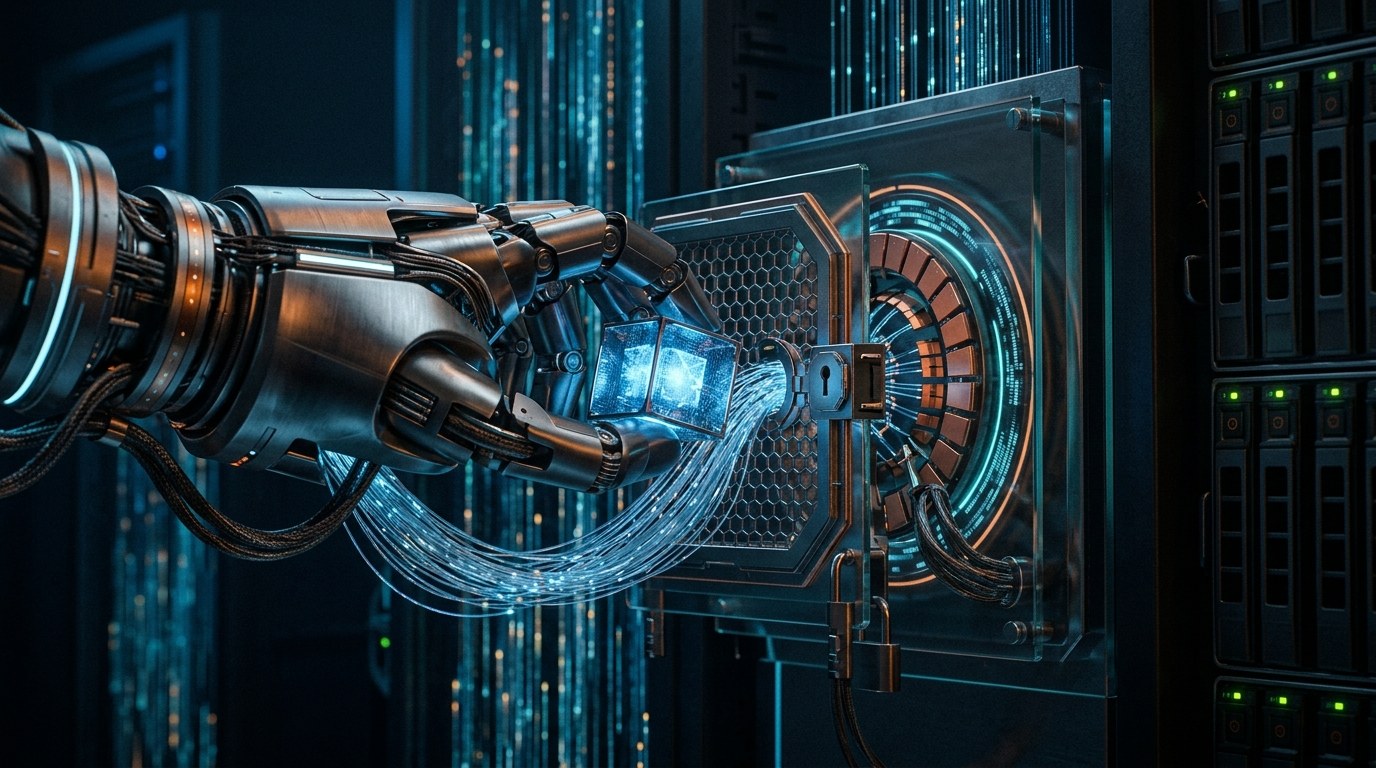
- The Custodian Signs: A separate process holds the SSH keys and performs the authentication on behalf of the agent. This keeps your keys safe and out of the agent's reach.
- Explicit Scoping: The custodian can limit access to specific servers. If you need to add a new server, it requires a new decision, enhancing security.
- Revocation Made Easy: Since the agent never holds the key, turning off access is straightforward and doesn’t require key rotation.
This custodian model is similar to how certificate-based SSH works in larger organizations, but it can be complex to set up independently.
How Termalin Implements This
Termalin is an SSH client with a built-in Model Context Protocol (MCP) server. Here’s how it works:
- Register the Local Server: You can register Termalin with your AI agent, allowing it to communicate securely.
- Controlled Access: The agent can only access hosts you've enabled. This means no passwords are stored on disk, reducing risk.
- Live Monitoring: You can watch the agent's actions in real-time, providing transparency and control.
- Scoped API Keys: If your agent operates in a different environment, you can create API keys that are limited to specific servers and can expire.
Starting Small
When using this system, it’s best to start with a low-stakes environment, like a staging server. Assign the agent a simple task, such as deploying a branch or monitoring logs. This way, you can observe its behavior and adjust before moving to more critical systems.
Conclusion
Using AI agents for server deployments can be secure if done correctly. By using a custodian model, you can keep your SSH keys safe while allowing AI to assist in your development process.
Merits
- Enhanced security by avoiding direct key sharing.
- Easier revocation of access without key rotation.
- Clear audit trails for actions taken by the agent.
- Controlled access to specific servers.
Demerits
- Initial setup may be complex.
- Requires careful management of the custodian process.
- May not be suitable for all environments.
Caution
This article is for educational purposes. Any placeholder values mentioned must be replaced with actual values in your implementation. Always verify claims against the original source before relying on them.
Frequently asked questions
- What is an SSH key? — An SSH key is a pair of cryptographic keys used for secure access to servers.
- Why shouldn't I share my SSH private key? — Sharing it gives others full access to your server, which can lead to security breaches.
- What is the custodian model? — It is a method where an agent requests actions, and a separate process manages authentication, keeping keys secure.
- How does Termalin enhance security? — Termalin manages authentication, allowing agents to request actions without holding sensitive keys.
- Can I monitor my AI agent's actions? — Yes, you can watch the agent's actions in real-time with Termalin.
- What should I do if I suspect my key has been compromised? — You should immediately rotate your keys and investigate the breach.
Tags
#ai #ssh #security #deployment #devops #automation #infrastructure #cloud #programming #technology
Incident Response: First Hour
A calm, evidence-preserving checklist for establishing control, bounding impact, communicating clearly, and containing an incident safely.
Free. No spam — unsubscribe in one click.
Responses
Sign in to leave a response.