
🎧 Listen to this article: हिंदी · English · தமிழ் · తెలుగు · ಕನ್ನಡ · മലയാളം · ଓଡ଼ିଆ · 日本語 · 中文
🌍 Read this in your language: हिंदी · தமிழ் · తెలుగు · ಕನ್ನಡ · മലയാളം · ଓଡ଼ିଆ · 日本語 · 中文
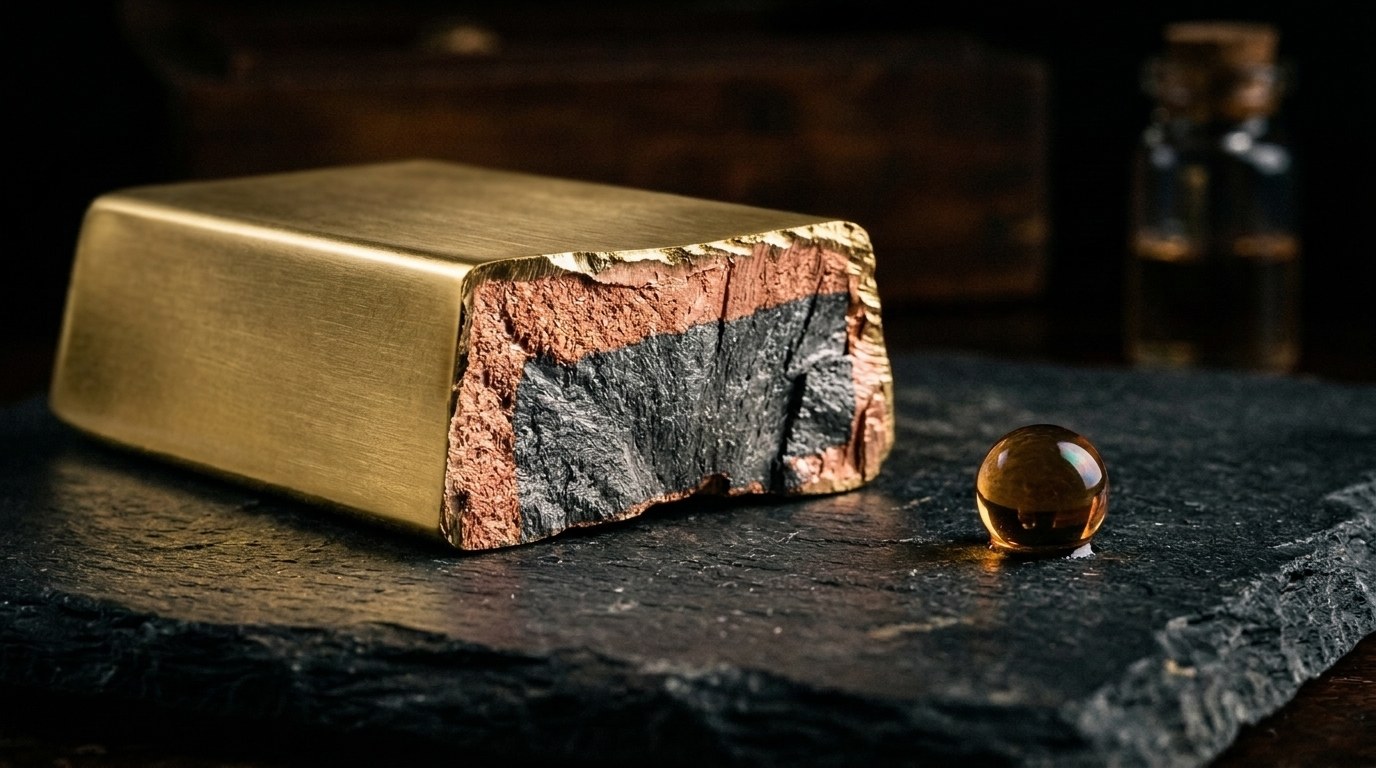
A bar can look like gold, weigh like gold and pass a quick scratch test, and still be mostly copper or tungsten inside. Some of the biggest gold frauds of recent years were built on exactly that gap between what a surface shows and what the metal really is.
Today is November 19, 2026. Gold prices are high, people still treat gold as a safe place for their money, and in India the wedding season is under way, so many families are buying jewellery, coins and bars. That combination is what fraudsters look for. When a product is expensive and in demand, a small drop in purity or a fake bar is worth a lot of money. This post explains the main kinds of gold scams, including well-known cases linked to China, and gives a simple set of checks before you pay.
What "China gold scams" usually means
The phrase covers three quite different things. Only the first is about one famous company; the other two can happen anywhere, including at a local shop.
1. Fake gold used as loan collateral
The best-known case is Wuhan Kingold Jewellery, a Chinese jewellery maker that was listed in the United States. In 2020, Chinese media reported that gold bars the company had pledged to lenders as collateral (an asset a borrower hands over as security for a loan) were in fact gold-plated copper. The reports said about 83 tonnes of "gold" were involved, backing loans worth around 20 billion yuan. When lenders checked the bars, the gold was a thin coating.
The lesson is not only about China. A lender, a vault or a buyer that trusts paperwork and appearance, without testing the metal, can be fooled at very large scale.
2. Mixing and plating to fake weight and colour
Gold is very dense, meaning a small piece is heavy for its size. That is why weighing a piece is a common quick check. Fraudsters get around it in two ways:
- Dense metal inside. Tungsten has almost the same density as gold, so a tungsten core wrapped in real gold can weigh about right. Other metals and powders, such as rhodium, rhenium or silver, have also been reported in adulterated pieces.
- Cheap metal with a gold coat. Copper or brass covered with gold plating looks right on the surface, which is enough to fool a buyer who only looks.
The danger is that many quick tests only check the outside of the piece.
3. Online "999" listings and buyback traps
As retail demand has grown, so have online traps:
- Fake 999 (24K) listings. "999" means 99.9 percent pure gold. Listings on marketplaces or social media may claim 999 purity at a price that looks too good, with no hallmark, no proper invoice and no seller you can trace.
- Buyback promises that are never kept. A seller promises to buy the gold back later at a fixed or high price. When you try to sell, the seller is gone or finds reasons to refuse.
- "Gold investment" schemes. Pitches that promise high, steady returns from gold trading or gold savings plans run by unknown firms. Real gold does not pay a fixed high return.
How purity numbers work
A few numbers help you read any bill or mark:
| Karat | Purity mark | Gold content |
|---|---|---|
| 24K | 999 | 99.9 percent |
| 22K | 916 | 91.6 percent |
| 18K | 750 | 75 percent |
Most jewellery in India is 22K, because pure 24K gold is too soft for detailed designs. A shop selling "24K jewellery" for a delicate design should make you ask questions. Coins and bars are where 999 or 995 purity is normal.
How Rohit checks gold before buying
Rohit is buying a 22K chain and two 10-gram coins for a family wedding. Here is the checklist Rohit follows.
Step 1: Choose an established seller
Buy from a jeweller or bank or refiner outlet with a fixed address, a long track record and a clear returns and exchange policy. Be careful with sellers on social media, unknown marketplace accounts and anyone who only accepts direct transfers. A discount far below the day's gold rate is a warning sign, not a bargain, because no honest seller can sell real gold for much less than the metal is worth.
Step 2: Check the BIS hallmark on the piece
In India, the Bureau of Indian Standards (BIS) runs gold hallmarking, and hallmarking is compulsory for most gold jewellery sold in a large and growing list of districts. A valid hallmark today has three parts:
- the BIS logo (a triangle mark),
- the purity grade, for example
22K916, - a HUID, a six-character code made of letters and numbers that identifies that single piece.
Older hallmarks without a HUID are no longer valid for new sales by jewellers. If a piece has no HUID, ask why before going further.
Step 3: Verify the HUID before you pay
Do not just look at the code; check it. In the official BIS Care app, open the option to verify a HUID and type in the code from the piece.
The app shows details recorded when the piece was hallmarked, such as the type of article, its purity and the hallmarking centre. Compare them with what you are buying. A code that does not exist, or that says "ring" when you are holding a chain, means you should stop.
Step 4: Insist on a proper tax invoice
Ask for a detailed bill, not a handwritten note. It should show:
- the item and its HUID,
- purity in karat and fineness (for example 22K, 916),
- gross weight and net gold weight,
- the gold rate used,
- making charges shown separately,
- GST details, with the seller's GST number.
At the time of writing, GST in India is usually charged at 3 percent on the gold value and at a separate rate on making charges; check current rates. The invoice is your legal proof of what you were promised. It also makes resale and any complaint much easier.
Step 5: Test beyond the surface for bigger amounts
Simple checks such as looking, weighing, using a magnet or a quick touchstone scratch only see the outside. A tungsten core or thick plating can pass them.
For larger purchases, sales or loans against gold, use certified testing:
- XRF testing. A machine reads the metal's make-up with X-rays without damaging it. It is fast and common at hallmarking centres, but it mainly reads the surface layer, so it can miss a hidden core.
- Fire assay. A small sample is melted and measured. It is the most reliable method, but it destroys the sample, so it is used for bars, bulk buying and disputes.
- Melting at resale. Many buyers of old gold melt it before paying, which reveals what is really inside.
For bars, buy from refiners whose bars carry a clear brand, purity, weight and serial number, and keep the certificate with the bar.
Step 6: Treat buyback and return promises with care
If a seller promises a buyback, get the terms written on the invoice or a signed document: who buys it back, at what rate or formula, and what deductions apply. A spoken promise is worth nothing if the seller disappears. Never join a scheme that promises a fixed high return on gold.
Step 7: If something is wrong, act quickly
Keep the invoice, the HUID result and photos of the piece. Go back to the seller first, then complain through BIS if the hallmark seems wrong, and use consumer complaint channels. Report online fraud to the national cyber crime portal or helpline. The sooner you act, the better the chance of tracing the money.
Conclusion
Gold scams range from huge frauds, like gold-plated copper pledged as loan collateral at Kingold, to a single chain with less gold than the label says. They all work by exploiting trust in appearance and paperwork. A buyer in India has good tools: a three-part BIS hallmark, a HUID you can verify in the BIS Care app, a detailed invoice and certified testing for larger amounts. Use all of them, especially when gold prices are high and demand is strong.
Merits
- HUID verification takes a minute and catches many fake or mismatched pieces.
- A detailed invoice gives legal proof of purity, weight and price.
- Buying from established sellers removes most online and buyback traps.
- Certified tests such as fire assay can reveal hidden cores that quick tests miss.
- Knowing the purity numbers helps you spot unrealistic claims quickly.
Demerits
- XRF and other surface tests can still miss a well-made tungsten core.
- Fire assay damages the sample, so it is not practical for finished jewellery.
- Trusted sellers may cost slightly more than unknown ones.
- Hallmarking rules cover set areas and grades, so some items fall outside them.
- A verified HUID shows how a piece was hallmarked, not that it was never altered afterwards.
Caution
This article is educational and is not financial or legal advice. Rohit is a fictional example. Facts about the Kingold case and other reported frauds are summarised as reported in the media, and figures may differ between sources. Hallmarking rules, HUID requirements, GST rates and testing practices can change, so check the current BIS rules and tax rates, and confirm details with the seller, BIS or a certified assay centre before relying on them for a purchase, sale or loan.
Frequently asked questions
- What was the Kingold gold scandal? — In 2020, reports said Wuhan Kingold Jewellery had pledged about 83 tonnes of gold-plated copper as loan collateral in place of real gold, backing loans worth around 20 billion yuan.
- How do fraudsters make fake gold feel heavy? — They hide a dense metal such as tungsten, which weighs almost the same as gold for its size, inside a layer of real gold.
- What is HUID on gold jewellery? — It is a six-character letter-and-number code in the BIS hallmark that identifies a single piece, which you can check in the BIS Care app.
- How do I verify a gold hallmark in India? — Look for the BIS logo, the purity grade such as 22K916 and the HUID, then enter the HUID in the BIS Care app and match the details.
- Can an XRF test detect fake gold? — It detects surface purity well and quickly, but it may miss a hidden core, so fire assay is used when certainty matters.
- Is 24K gold used for jewellery? — Rarely for detailed designs, because 24K gold is very soft; most Indian jewellery is 22K, while coins and bars are often 999.
- What should a gold invoice include? — The HUID, karat and fineness, gross and net weight, gold rate, separate making charges and GST details with the seller's GST number.
- Are gold buyback offers safe? — Only when the terms are written down by an established seller; spoken promises and fixed high returns are common signs of a scam.
Tags
#goldscam #fakegold #bishallmark #huid #goldbuying #consumerawareness #fraudprevention #goldjewellery #personalfinance #india
API Security Testing Checklist
A practical workflow for testing authentication, authorization, input handling, business logic, and evidence without losing track of scope.
Free. No spam — unsubscribe in one click.
Responses
Sign in to leave a response.