
🎧 Listen to this article: हिंदी · English · தமிழ் · తెలుగు · ಕನ್ನಡ · മലയാളം · ଓଡ଼ିଆ · 日本語 · 中文
🌍 Read this in your language: हिंदी · தமிழ் · తెలుగు · ಕನ್ನಡ · മലയാളം · ଓଡ଼ିଆ · 日本語 · 中文
You start your new IT job with a computer science or cybersecurity degree, excited to apply what you learned. Then you realize something is terribly wrong: the network barely works, servers crash regularly, security patches haven't been applied in years, and nobody seems to know what's going on. Welcome to the real world of IT.
This scenario happens more often than you'd think, especially at smaller organizations where IT budgets are tight and infrastructure has been neglected. As of June 2026, many organizations still run on aging systems that were never properly maintained. If you've just started your first IT role and you're feeling overwhelmed, you're not alone — and there's a structured way to move forward.
Understanding What You've Inherited
When you walk into a broken infrastructure, the first step is to stop and assess rather than panic. Yes, everything feels urgent. But jumping in without understanding the situation usually makes things worse.
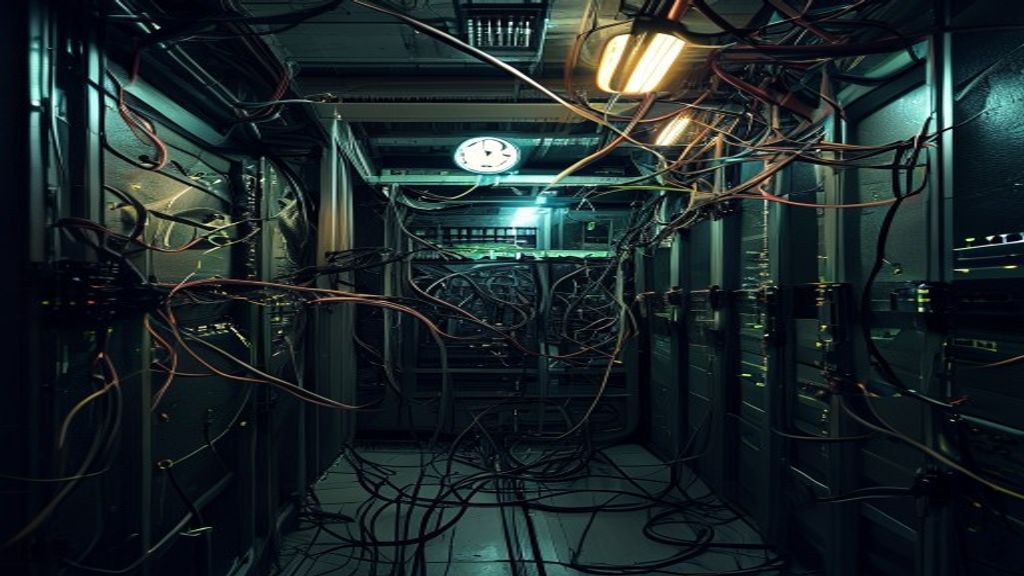
Broken infrastructure typically looks like this: servers that weren't updated in years, outdated software that no longer gets security patches, poorly documented systems so you don't know how anything is connected, and the person who knows the most leaving because they're burned out.
The good news? You have a fresh perspective. You didn't build this mess, so you're not emotionally attached to old decisions. You can look at the situation objectively and ask simple questions like "Why are we still running Windows Server 2012?" or "Who set up this network and why?"
Dealing With Burnout in Your Team
Legacy infrastructure breaks people. If your colleague is frustrated, overwhelmed, or angry about every ticket, it's usually because they've been fighting a losing battle against broken systems for years. This isn't about them being bad at their job — it's about being trapped in an impossible situation.
Here's what matters: don't let their frustration become your frustration. Stay curious and calm. If they leave (which burned-out people often do), don't take it personally. The best thing you can do is help improve the situation so the next person doesn't burn out too.
When your team shrinks suddenly, you'll have to make hard choices about what gets fixed first. This is actually an opportunity. A two-person team has to prioritize ruthlessly, which means you focus on high-impact work instead of drowning in low-value tasks.
Prioritizing What to Fix First
You can't fix everything at once. So decide: what breaks the organization's ability to function?
Typically, fix in this order:
Security issues first
Outdated systems with unpatched vulnerabilities are actively dangerous. If your servers don't have the latest security patches, you're one exploit away from a data breach. This isn't optional.
Then, critical systems
What does your organization absolutely need to work? If it's a school, maybe the student information system or email. If it's a small business, maybe your core business application. Identify those and make sure they're stable.
Then, everything else
Less critical systems can wait a little longer while you shore up the foundation.
Making a Plan
Write down what's broken and what needs fixing. Seriously, write it down. A simple spreadsheet works: system name, current version, last updated, known issues, priority level.
Next, figure out your dependencies. Sometimes you can't upgrade Server B until Server A is updated, because B relies on A's network connection. Understand the chains before you start ripping things out.
Then start with quick wins. Fix the things that are broken and easy to replace. You'll feel progress, your team will feel relief, and you'll build credibility that you actually know what you're doing. Momentum matters.
Learning as You Go
You studied cybersecurity or IT in school, but school doesn't teach you how to actually run systems at an organization. This job will teach you more than any course could.
Every system you fix, write notes: What was wrong? How did you fix it? Why did it break in the first place? This builds institutional knowledge that your organization desperately needs.
Join communities online. Read documentation. Ask questions on Stack Overflow. Watch YouTube tutorials on the specific systems you're managing. Real-world infrastructure knowledge is learned by doing, not by guessing.
The Mindset Shift
Here's the hardest part: stop thinking like a student and start thinking like a professional. Students worry about getting the perfect answer. Professionals worry about keeping systems running and protecting data.
You don't need to know everything. You need to know how to find answers quickly, how to test changes safely, and how to document what you learn.
When the person who knows the infrastructure leaves, that's actually a turning point. It forces you to step up and own the systems rather than relying on someone else. It's scary, but it's also where you grow.
Conclusion
Inheriting broken infrastructure is brutal, but it's also one of the best learning opportunities in IT. You get to see how neglected systems fail, how to prioritize under pressure, and how to actually fix things instead of just studying theory. The frustration and overwhelm are normal — they mean you understand the scope of the problem. Focus on security first, tackle one system at a time, and document everything you learn along the way.
Merits
- You gain hands-on experience with real systems that no classroom can provide
- Fixing legacy systems teaches you troubleshooting and problem-solving skills
- As things improve, you see direct impact from your work
- You learn how organizations actually operate, not just how they should operate
- You build resilience and confidence handling pressure
- When you move to your next job, you'll be far ahead of peers who only worked with modern systems
Demerits
- The pace of work is overwhelming and sustained pressure can lead to burnout
- You might make mistakes with systems you don't fully understand yet
- Documentation is usually poor, so you're constantly reverse-engineering how things work
- You can feel isolated if you're in a small team with no senior person to mentor you
- Quick fixes might create technical debt that you'll have to deal with later
- Budget constraints might prevent you from replacing systems that really need it
Caution
The example in this article uses placeholder scenarios — your actual organization's infrastructure, systems, and timelines will differ. Always test changes in a safe environment before deploying to production. Before making major changes to network infrastructure or security systems, get approval from whoever has the authority. Proceed at your own risk, and when in doubt, ask someone with more experience or check the documentation for the system you're touching. Never assume you understand a legacy system until you've read its documentation, checked its configurations, and tested your changes thoroughly.
Frequently asked questions
- What do I do if the main person who knows the systems leaves?
- How do I prioritize fixing systems when everything is broken?
- What security vulnerabilities should I fix first?
- How do I learn legacy systems I've never encountered before?
- Should I replace old systems or try to fix them?
- How do I document systems that have no documentation?
- What's the best way to handle security patches on critical systems?
- How do I avoid burning out when inheriting broken infrastructure?
Tags
#ITInfrastructure #LegacySystems #CareerGrowth #Cybersecurity #FirstJob #SystemsAdministration #TechDebt #ITManagement
Linux Server Hardening Checklist
30 practical steps to take a fresh Linux box from default to defensible. Enter your email — you'll get the PDF instantly, plus new posts on Linux, security & AI.
Free. No spam — unsubscribe in one click.
Responses
Sign in to leave a response.